05 November 2026
/10 min read
Logistics vs Supply Chain Management: What's the Difference?
In many boardrooms, "logistics" and "supply chain" are used as if they mean the same thing. They do not, and the confusion has a cost. Teams hire for the wrong skills, buy the wrong services and measure the wrong numbers.
The short version: logistics is one part of supply chain management. Logistics moves and stores goods. Supply chain management decides what to make, what to buy, how much to stock and which partners to rely on, and then relies on logistics to execute.
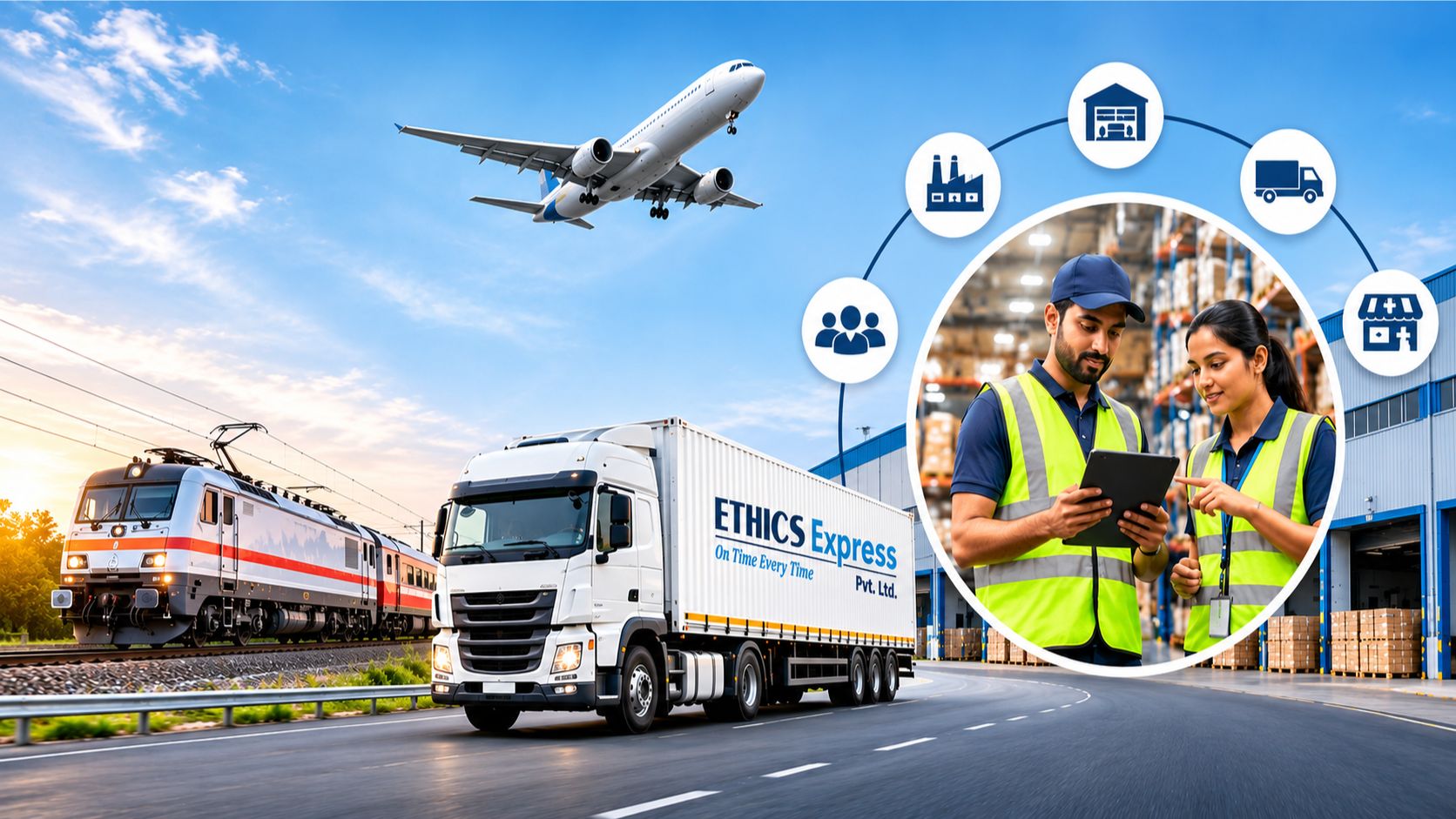
This guide explains logistics vs supply chain management in practical terms, with a real-world example, a decision guide for businesses and some notes on careers. It is written for founders, operations heads and finance leads who need to know where to invest first. Day to day, most Indian shippers manage rail, air and surface logistics together, which is exactly where the two disciplines meet.
What Is Logistics?
Logistics is the planning and execution of how goods are moved and stored, along with the related information, from origin to destination.
It covers transportation, warehousing, inventory handling, packaging, order processing and delivery. Its question is: how do we get this consignment there on time, in good condition and at the right cost?
Logistics is largely an execution discipline. It includes the final stretch to the consignee, where last mile delivery depends on address quality, vehicle availability and clean proof of delivery. For a deeper definition, see our guide on what is logistics.
What Is Supply Chain Management?
Supply chain management (SCM) is the coordination of the entire flow of materials, products, information and money, from sourcing raw materials to delivering the finished product and handling returns.
It covers supplier selection, procurement, production planning, demand forecasting, inventory strategy, logistics and customer fulfilment.
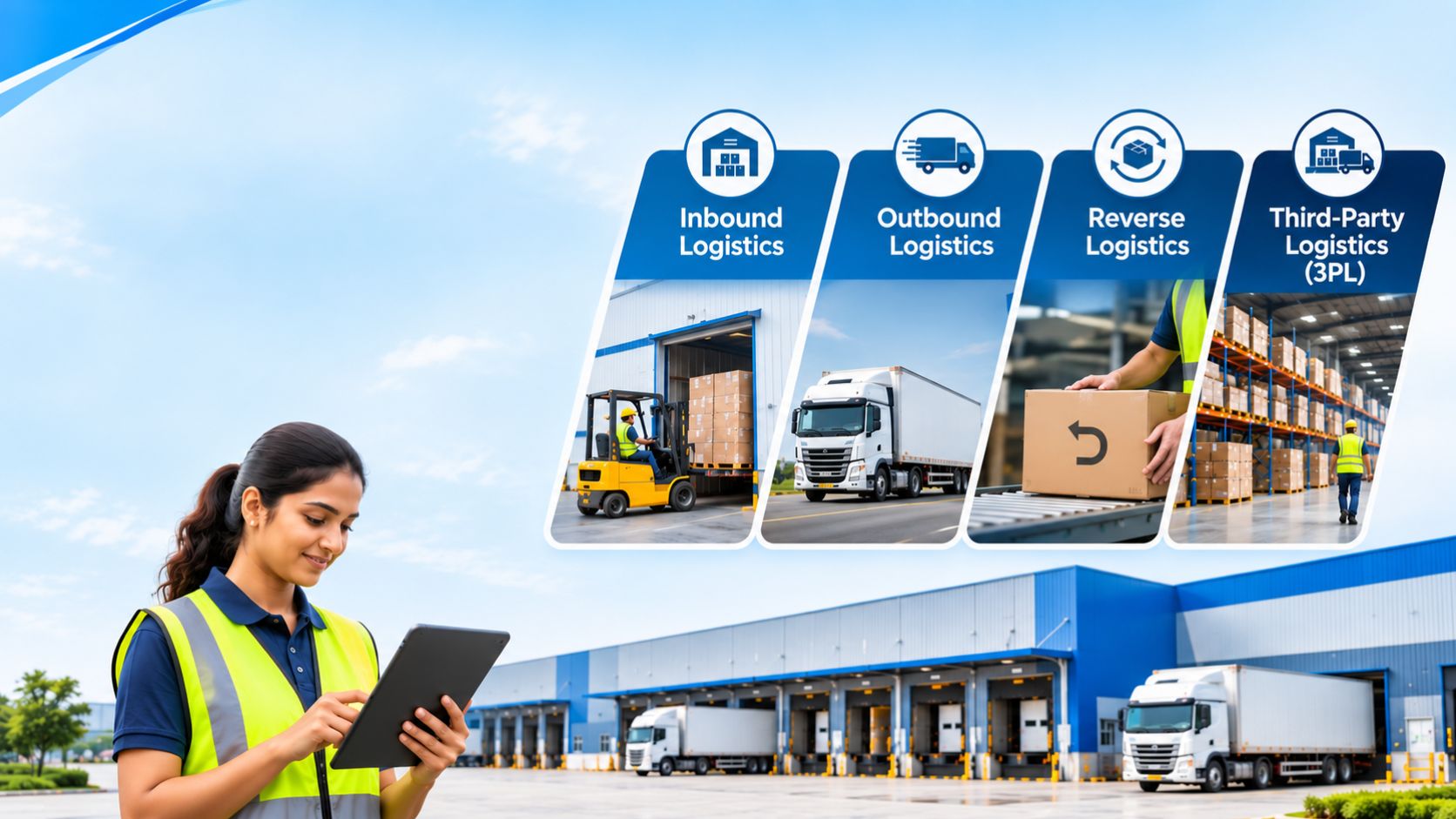
Its question is broader: how do we design the whole network so that the right product is available at the right place, at the lowest total cost and acceptable risk? Some companies extend SCM into partnerships with 3PL and 4PL providers, who manage transport, warehousing or the wider network on their behalf.
Logistics vs Supply Chain Management: Key Differences
| Aspect | Logistics | Supply Chain Management |
|---|---|---|
| Scope | Movement and storage of goods | End-to-end flow from sourcing to customer |
| Primary goal | Efficient, reliable delivery | Network-wide cost, service and resilience |
| Time horizon | Day-to-day and short term | Medium to long term, strategic |
| Typical decisions | Mode, carrier, route, warehouse operations | Suppliers, sourcing, production, safety stock, network design |
| Typical KPIs | On-time delivery, transit time, damage rate, cost per kg | Inventory turns, fill rate, forecast accuracy, cash-to-cash cycle |
| Typical owner | Logistics or operations head | Supply chain head or COO |
| Financial impact | Freight cost, claims, detention | Working capital, inventory carrying cost, margin |
The finance angle explains why both matter. Logistics decisions show up mainly in freight and service costs. Supply chain decisions, such as how much safety stock to hold, show up in working capital. An extra week of safety stock ties up cash that carries a financing cost, even if no truck ever moves.
How Logistics and Supply Chain Management Work Together: A Real-World Example
Consider an illustrative case: a consumer-durables manufacturer based in Delhi NCR, selling to dealers in Mumbai ahead of the festive season.
The supply chain decisions. The planning team forecasts festive demand, agrees production volumes with the plant and decides how much stock should sit in a Mumbai warehouse rather than at the central warehouse. It also checks supplier lead times for key components.
The logistics decisions. Once the plan is set, logistics selects how to move it. For bulk transfers to the Mumbai hub, ftl logistics gives dedicated capacity and predictable transit. For planned replenishment that can tolerate a longer window, a Delhi to Mumbai Rail parcel service can bring down cost per kg compared with road.
When plans break. If demand spikes and a dealer is about to run out of a fast-moving model, air cargo logistics can be a deliberate exception. The freight premium is accepted because a stock-out costs more than the extra freight.
Notice how the two layers interact. A weak forecast forces expensive emergency freight. Poor logistics reliability forces higher safety stock. Neither can be fixed in isolation.
Which Does Your Business Need? Practical Guide
Most businesses need both, but the starting point differs.
Early-stage or single-lane shippers: start with logistics. Get one or two lanes reliable, set up tracking and agree clear liability terms.
Growing multi-location businesses: invest in supply chain planning alongside logistics. Demand forecasting and inventory placement start to matter more than a single freight rate.
Importers, pharma and high-value shippers: build a plan for urgent movement. Air to Air Services connect airports directly and suit time-critical consignments where delay is costly.
Businesses without in-house capacity: consider outsourcing logistics first, then planning. If you do, compare providers using our guide to the top 10 logistics company in India, and read our note on in-house logistics vs 3PL before you commit.
A simple test: if your main problems are late deliveries, damage and freight cost, you have a logistics problem. If they are stock-outs, excess inventory and unpredictable demand, you have a supply chain problem.
Common Misconceptions and Career Insights
Common misconceptions
"Logistics is just trucking." Transport is one piece. Warehousing, inventory handling, documentation, tracking and returns are equally important. Even door to door delivery, the most visible part for a customer, rests on a long chain of unseen planning.
"Supply chain management is only for large enterprises." Any business that buys, stocks and sells is running a supply chain, whether or not it is managed deliberately.
"Outsourcing logistics means outsourcing the supply chain." Outsourcing execution does not transfer responsibility for planning, forecasting and supplier decisions.
"Lowest freight rate means lowest cost." Claims, delays and excess inventory often outweigh the rate difference.
Career insights
Logistics roles tend to be operational: transport planner, dispatch and fleet coordinator, warehouse manager, freight and customs executive. Supply chain roles lean analytical: demand planner, procurement manager, supply chain analyst and S&OP lead.
Paths overlap, and many senior leaders move from logistics into broader supply chain roles. Useful skills include data analysis, familiarity with ERP, WMS and TMS systems, cost modelling and negotiation. Recognised certifications from bodies such as ASCM can help, but practical exposure to lanes, vendors and exceptions is what builds credibility.
Conclusion
Logistics vs supply chain management is not a choice between two options. Logistics is the execution layer inside a broader planning discipline. Fix the one that is hurting you most, then connect the two so decisions in one are visible to the other.
If you are reviewing your current freight setup, Ethics Express can look at your lanes across road, rail and air and share a practical view on mode and cost.