22 October 2026
/8 min read
What Is Logistics? Meaning, Types, Process and How It Works in India (2026 Guide)
Introduction
Ask five managers what logistics means and you will usually get five answers. Transport, warehousing, courier, supply chain, "getting goods from A to B." All are partly right, and that is the problem. When a business treats logistics as just transport, it ends up buying on rate and paying for it later in delays, damage and locked-up cash.
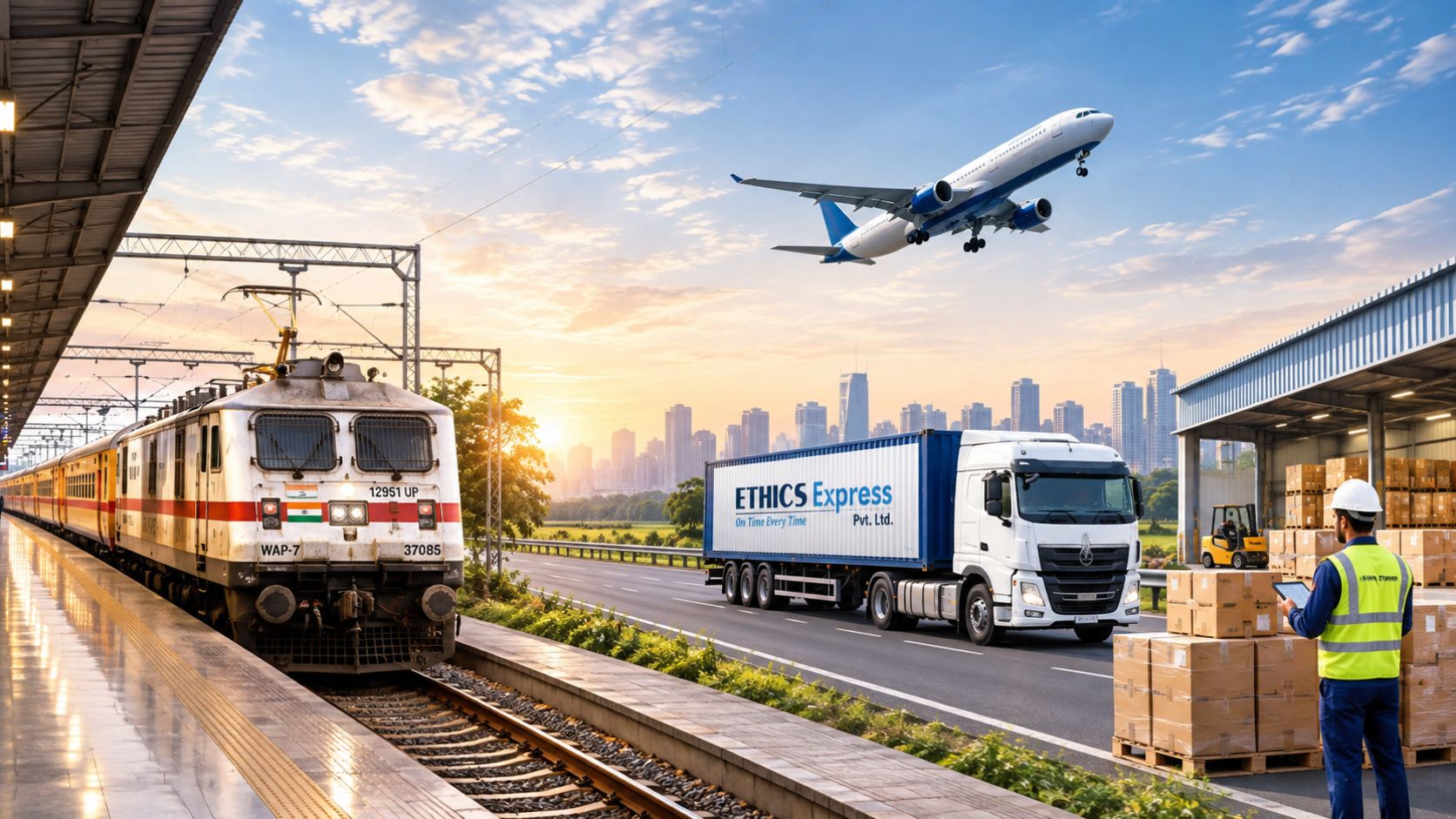
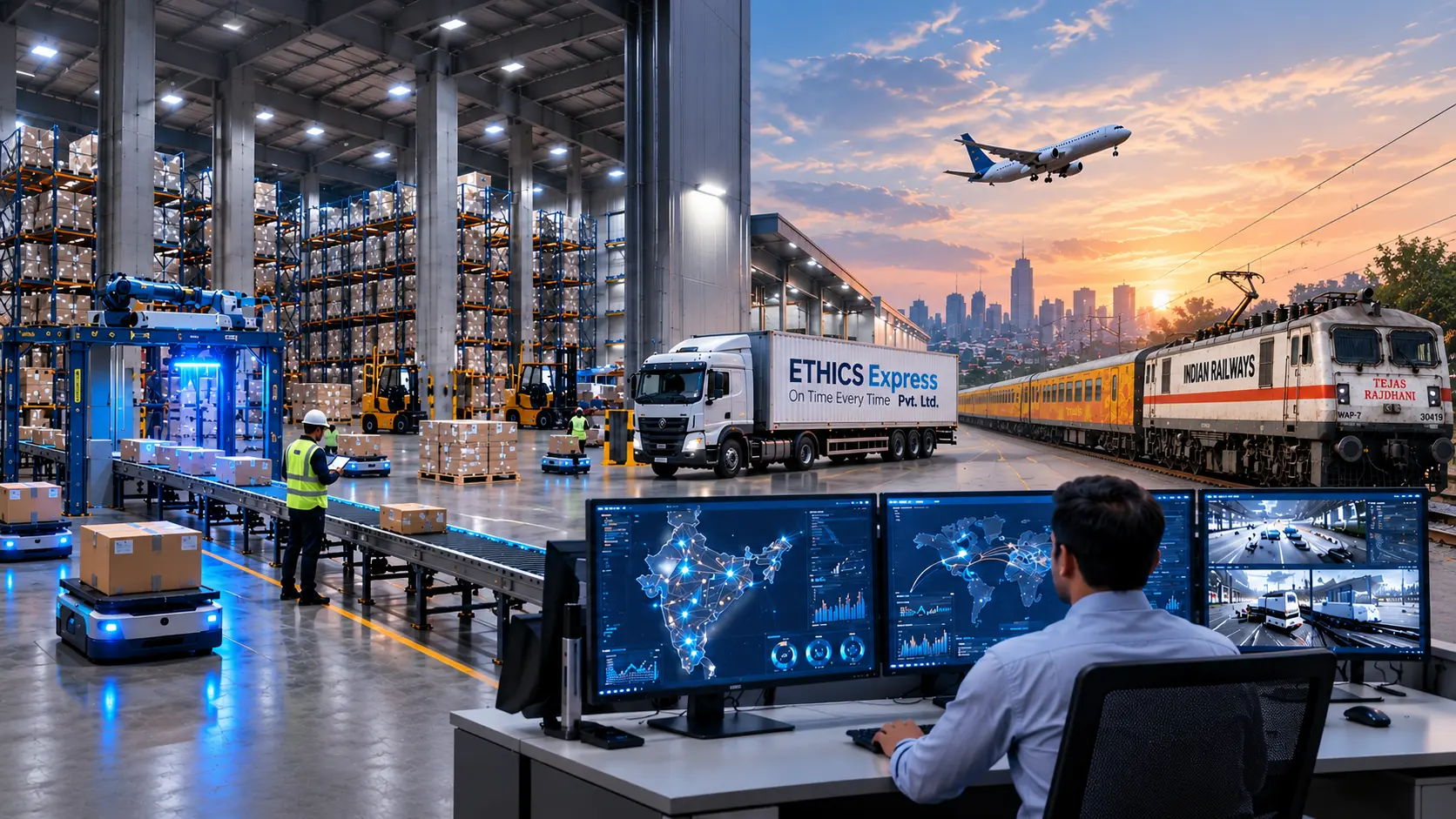
In practice, logistics is an operating system for moving goods and information. It spans rail, air and surface logistics, and it sits directly on your balance sheet through freight cost, inventory holding and delivery performance.
This guide explains the meaning of logistics, how it works step by step, the main types and transport modes, the Indian context in 2026, and the KPIs worth tracking. It is written for business owners, supply chain managers and finance leads.
What Is Logistics?
Logistics is the planning, execution and control of how goods are moved and stored, along with the related information, from the point of origin to the point of consumption.
It covers transportation, warehousing, inventory management, packaging, materials handling and order processing.
A simple example: a pharma distributor in Gurugram receives an order from a hospital chain in Mumbai. Logistics decides which stock is picked, how it is packed, which mode carries it, how its temperature is controlled, when it arrives and how delivery is proven. Every one of those choices carries a cost and a risk.
Logistics vs Supply Chain Management
The two terms are often used interchangeably, but they are not the same. Logistics is one part of supply chain management.
Logistics | Supply Chain Management | |
| Scope | Movement and storage of goods | End-to-end flow from sourcing to customer |
| Focus | Efficiency of delivery | Coordination across partners and functions |
| Includes | Transport, warehousing, inventory | Logistics, procurement, production planning, demand planning |
| Typical owner | Logistics or operations head | Supply chain head or COO |
In short, supply chain management decides what to make, buy and stock. Logistics makes sure it physically arrives.
How Does Logistics Work?
Step-by-step flow of a B2B shipment
Order and planning. Demand is confirmed, and the load, route, mode and delivery window are planned.
Inbound movement. Raw materials or stock move from suppliers to a plant or warehouse.
Warehousing and inventory. Goods are received, checked, stored and tracked.
Order processing and packing. Orders are picked, packed, labelled and documented, including GST invoice and e-way bill where required.
Line-haul transport. The consignment moves between cities by road, rail or air.
Last mile delivery. The goods reach the final consignee, and proof of delivery is captured.
Reverse logistics. Returns, replacements and damaged goods flow back.
Most delays do not come from the long haul. They come from handoffs between these steps, where responsibility is unclear and information is late.
Types of Logistics
Inbound logistics: moving materials and goods into your business from suppliers.
Outbound logistics: delivering finished goods to distributors, retailers or customers.
Reverse logistics: managing returns, repairs, recalls and recycling.
Third-party logistics (3PL): outsourcing transport, warehousing or both to a specialist provider. A 4PL goes further and manages the whole network on your behalf.
Specialised logistics: cold chain for pharma and perishables, hazardous goods, project cargo and high-value shipments, each with its own compliance requirements.
Modes of Transportation
Mode | Strength | Limitation | Typical use |
| Road | Flexible, reaches almost any pin code | Slower on long hauls, traffic and toll exposure | Regional and door-to-door freight |
| Rail | Cost-efficient on long corridors | Fixed routes, needs road legs | Planned bulk parcel volume |
| Air | Fastest transit | Highest cost per kg | Urgent, high-value goods |
Road
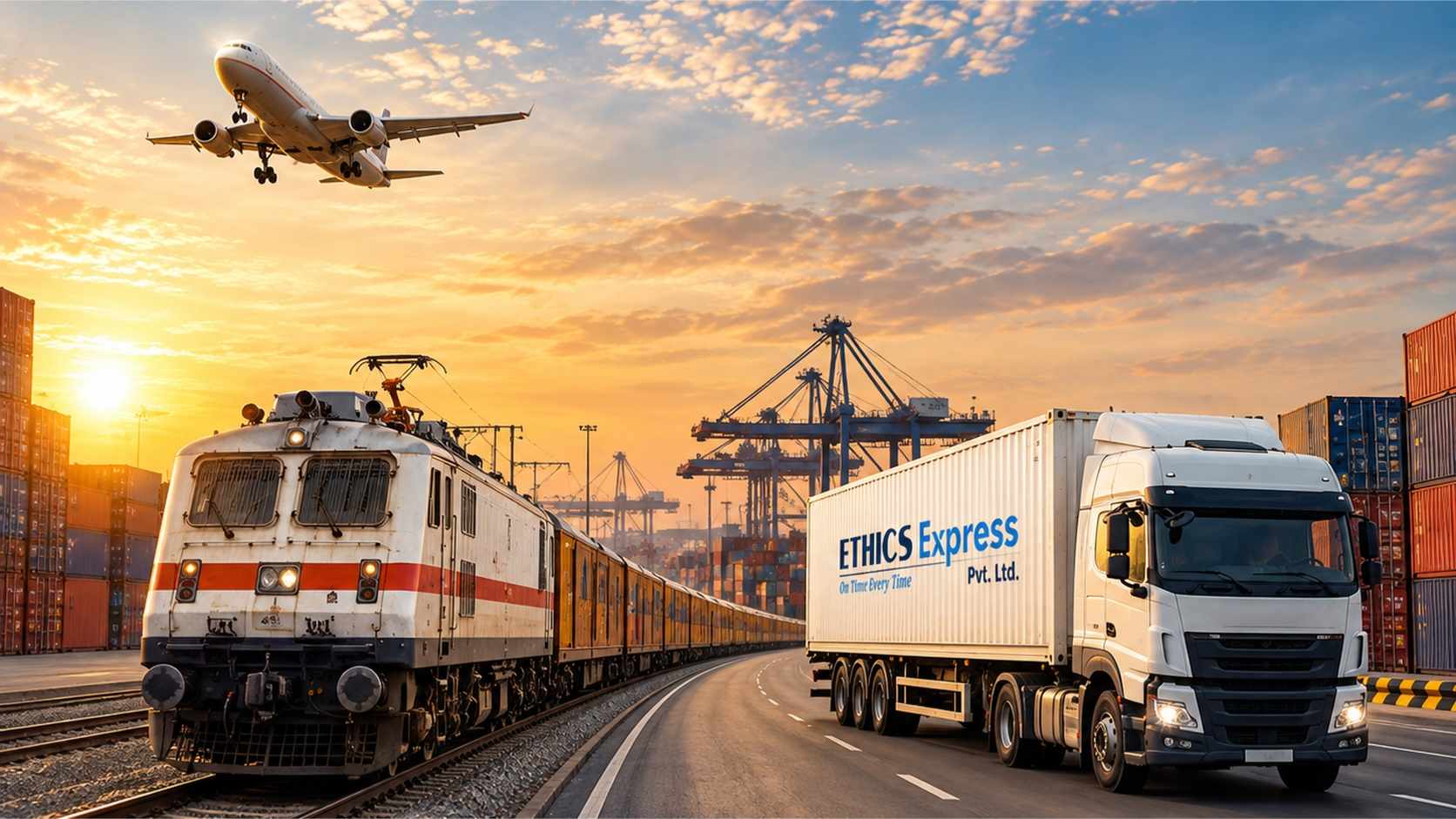
Road carries the largest share of freight in India. For large, predictable consignments, ftl logistics gives you a dedicated truck and tighter transit control, while Part Truck Load suits smaller, fragmented loads at the cost of more handling points.
Rail
Rail is gaining attention for long-corridor freight, especially as the dedicated freight corridors mature. It works best for planned, non-urgent volume, with road collection and delivery at either end.
Air
When a delay costs more than the freight premium, air cargo logistics earns its price. Think critical spares, pharma shipments and stock-out replenishment.
Logistics in India: The Local Picture
India's logistics landscape is being reshaped by policy. The National Logistics Policy (2022), PM Gati Shakti and the Unified Logistics Interface Platform (ULIP) aim to reduce logistics cost and connect data across transport modes. GST and the e-way bill system have also made documentation and movement more traceable.
For urgent movement between metros, Air to Air Services connect airports directly and suit time-critical consignments. For planned volume, a Delhi to Mumbai Rail parcel service can offer a lower cost per kg than road, provided you can accept a longer transit window.
Two Indian realities are worth planning for. First, demand is moving into Tier 2 and Tier 3 cities, where address quality, delivery density and cold chain infrastructure are weaker than in the metros. Second, pharma and food shippers must maintain temperature control and GDP-aligned documentation across the journey, not just at the warehouse.
Why Logistics Is Important for Business
It directly shapes cost. Freight is often one of the largest controllable costs after raw materials. Small gains per consignment compound across thousands of shipments.
It affects working capital. Slow or unreliable transit means stock sits longer, either in transit or as safety buffer. A consignment worth ₹50 lakh that spends three extra days on the road carries three extra days of financing cost and delays invoicing.
It defines customer experience. Reliable door to door delivery with accurate ETAs and clean proof of delivery is now a competitive advantage in B2B, not just in retail.
It manages risk. A single-lane or single-vendor dependency can stop dispatch. Good logistics planning builds in backup capacity and clear liability terms.
Key Logistics KPIs to Track
On-time delivery (OTD) / OTIF: share of consignments delivered on time and in full.
Transit time and variance: the average, and how much it swings.
Damage and loss rate: shipments affected as a share of total.
Freight cost as a percentage of sales: the cleanest link between logistics and profit.
Cost per kg or per shipment: useful for lane-level comparison.
Proof-of-delivery turnaround: affects billing speed and cash collection.
Claim settlement time: a strong test of a carrier's accountability.
Perfect order rate: orders that are on time, complete, undamaged and correctly documented.
When comparing providers against these KPIs, our guide to the top 10 logistics company in India explains what each is known for and where it fits.
Future Trends in Logistics
Multimodal shift: longer-haul freight moving gradually toward rail as corridor capacity improves.
Data integration: ULIP-linked tracking making real-time ETAs more dependable.
AI-assisted planning: route, mode and load planning supported by predictive analytics.
Control towers: single dashboards combining shipment, inventory and exception data.
Cleaner fleets: electric and CNG vehicles spreading first in urban and short-haul work.
Emissions reporting: large buyers asking carriers for carbon data alongside price and service levels.
Conclusion
Logistics is not a back-office cost to minimise. It is a lever that touches cost, cash flow, customer satisfaction and resilience. Start by mapping your lanes, choose the right mode for each load, track a small set of KPIs, and revisit them every quarter.
If you want a second opinion on your current freight setup, Ethics Express can review your lanes across road, rail and air and give a practical view on mode and cost.