17 September 2026
/8 min read
Top Challenges of Last-Mile Delivery in Tier 2 and Tier 3 Cities in India
Introduction
India's next wave of consumption growth isn't coming from its metros — it's coming from Tier 2 and Tier 3 cities. Places like Indore, Coimbatore, Jaipur, and hundreds of smaller towns are now major demand centres for e-commerce logistics in India and FMCG distribution alike. But last-mile delivery in Tier 2 and Tier 3 cities comes with a very different set of challenges than delivering within a metro — from patchy infrastructure to lower delivery density.
This guide breaks down the biggest obstacles businesses face when scaling last-mile delivery beyond the metros, and how the right freight strategy helps overcome them.
Why Tier 2 and Tier 3 Delivery Is Fundamentally Different
Metro last-mile delivery benefits from dense population clusters, well-mapped addresses, and mature logistics infrastructure. Tier 2 and Tier 3 cities — and especially the smaller towns around them — often lack these advantages, which makes standard metro-optimized delivery models inefficient or unreliable when applied directly.
Key Challenges in Tier 2 and Tier 3 Last-Mile Delivery
1. Lower Delivery Density Increases Per-Parcel Cost
In metros, a delivery vehicle can complete dozens of drops within a small radius. In Tier 2 and Tier 3 cities, addresses are more spread out, which means fewer deliveries per route and a higher cost per parcel. Businesses need smarter route planning and consolidation strategies to keep last-mile costs manageable at this lower density.
2. Inconsistent Address Formats and Weak Geo-Mapping
Many Tier 2 and Tier 3 addresses rely on landmarks rather than standardized formats, and digital mapping coverage is often less precise than in metros. This increases failed delivery attempts and delays — a persistent challenge for any business scaling e-commerce logistics in India beyond its core metro markets.
3. Limited Direct Freight Connectivity
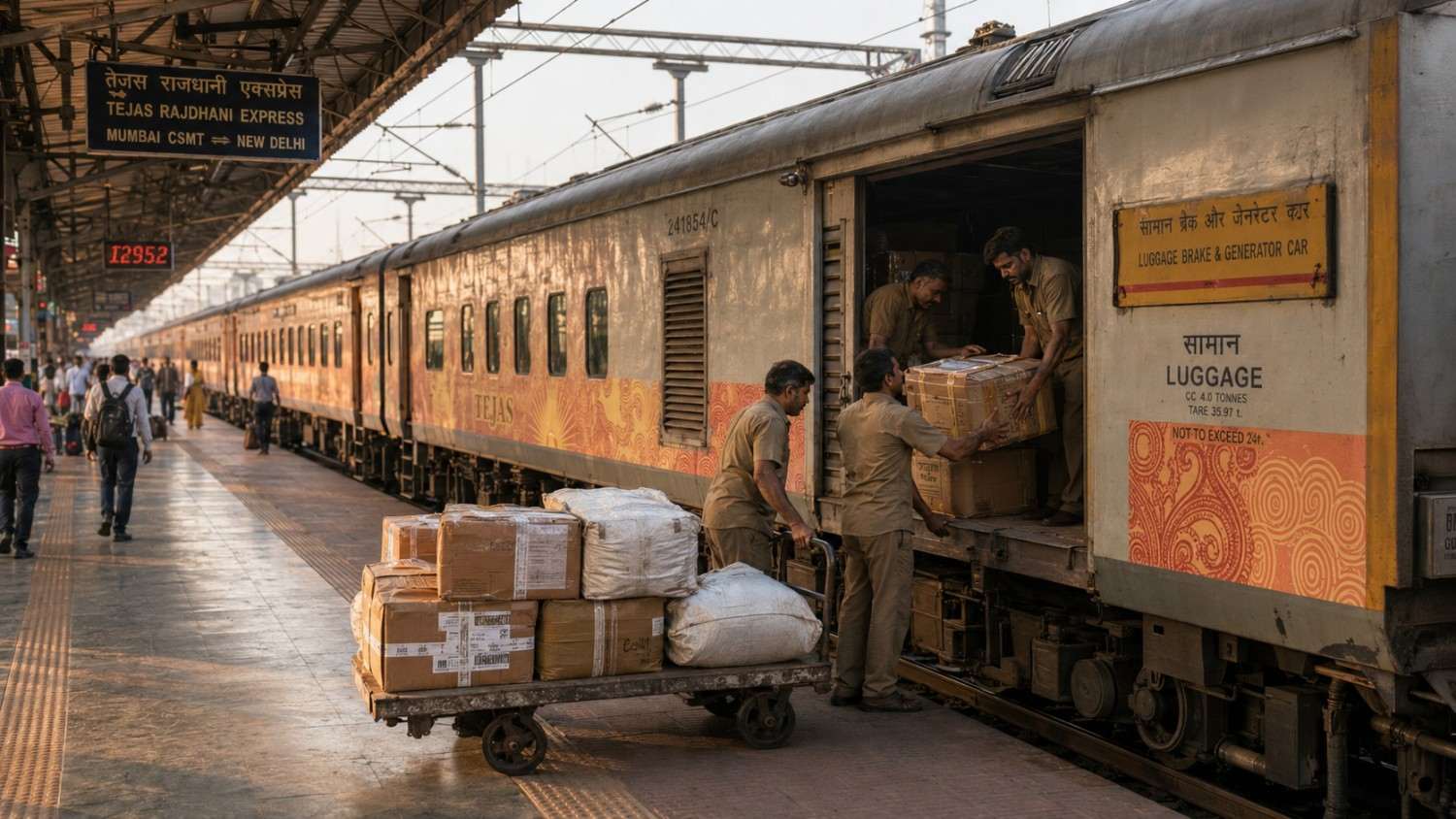
Not every Tier 2 or Tier 3 destination sits near a rail terminal or major highway corridor, which limits freight mode options. Comparing rail parcel vs road freight becomes more complex here — a rail parcel service on the Delhi to Mumbai corridor works well for movement between two major hubs, but the "last leg" from a rail terminal or regional hub into a smaller town still depends entirely on road transport and a genuinely reliable door-to-door service to close that gap.
4. Choosing the Right Freight Model for Lower, More Variable Volumes
What is FTL? Full Truck Load (FTL) dedicates a full truck to a single shipment — efficient for high-volume routes, but often impractical for Tier 2/3 destinations where individual shipment volumes are smaller and less predictable. Understanding FTL and PTL becomes especially important here: PTL (Part Truck Load) allows businesses to consolidate smaller shipments bound for the same region, making regional distribution to smaller cities significantly more cost-efficient than defaulting to FTL on every route.
5. Cold Chain Infrastructure Gaps
Temperature-controlled infrastructure — cold storage facilities, refrigerated vehicles — is far less widespread outside major metros. This creates a real challenge for maintaining cold chain and GDP compliance when shipping pharmaceuticals or perishable FMCG supply chain products into Tier 2 and Tier 3 markets, where the nearest compliant cold storage facility may be hours away from the final delivery point.
6. Limited Local Delivery Workforce and Infrastructure
Metros generally have deeper networks of local delivery partners, gig workers, and established last-mile infrastructure. Tier 2 and Tier 3 cities often have a smaller pool of reliable local delivery resources, which can create bottlenecks during demand spikes, such as festive sales periods for e-commerce businesses.
7. Payment and Returns Handling Complexity
Cash-on-delivery remains more common in smaller cities, adding operational complexity to last-mile logistics — cash collection, reconciliation, and handling returns all require additional processes compared to prepaid, metro-centric delivery models.
8. Time-Sensitive Shipments Have Fewer Fast Options
While metros can rely on same-day courier networks or urgent local dispatch, Tier 2 and Tier 3 cities often have fewer expedited options. For genuinely time-critical shipments, an air-to-air service to the nearest major airport, combined with a fast final road leg, is sometimes the only way to meet tight delivery windows in smaller markets.
How Businesses Can Solve These Challenges
- Use a hybrid freight strategy: combine rail parcel for bulk inter-city movement, FTL and PTL flexibly based on regional shipment volume, and air-to-air service for genuinely urgent cases
- Partner with a logistics provider with real regional warehousing, not just metro hubs, to shorten the final delivery leg
- Invest in address verification and local mapping data specific to Tier 2/3 geographies rather than relying on metro-calibrated systems
- Ensure cold chain infrastructure extends beyond metro warehouses if shipping temperature-sensitive FMCG or pharma products into smaller cities
- Build reliable door-to-door service capability specifically for these markets, rather than assuming metro delivery models will translate directly
Conclusion
Last-mile delivery in Tier 2 and Tier 3 cities is one of the biggest growth opportunities — and operational challenges — facing Indian logistics today. Lower delivery density, weaker address infrastructure, limited direct freight connectivity, and cold chain gaps all require a different approach than standard metro delivery models. Solving this well means combining the right mix of FTL and PTL, smart use of rail parcel options like the Delhi-Mumbai corridor, air-to-air service where speed is critical, and dependable door-to-door delivery built specifically for these markets.
Ethics Express helps businesses expand confidently into Tier 2 and Tier 3 cities with a logistics network built for exactly these challenges — combining flexible FTL/PTL road freight, rail parcel service on the Delhi-Mumbai corridor, air-to-air service for urgent shipments, cold chain and GDP-compliant handling, and reliable door-to-door delivery designed for both e-commerce logistics in India and FMCG supply chain distribution beyond the metros. If you're scaling into smaller cities and towns, we can help you build a last-mile strategy that actually works there.
Get a logistics quote from Ethics Express →